Multi-Model AI Program: Build and Orchestrate AI Applications
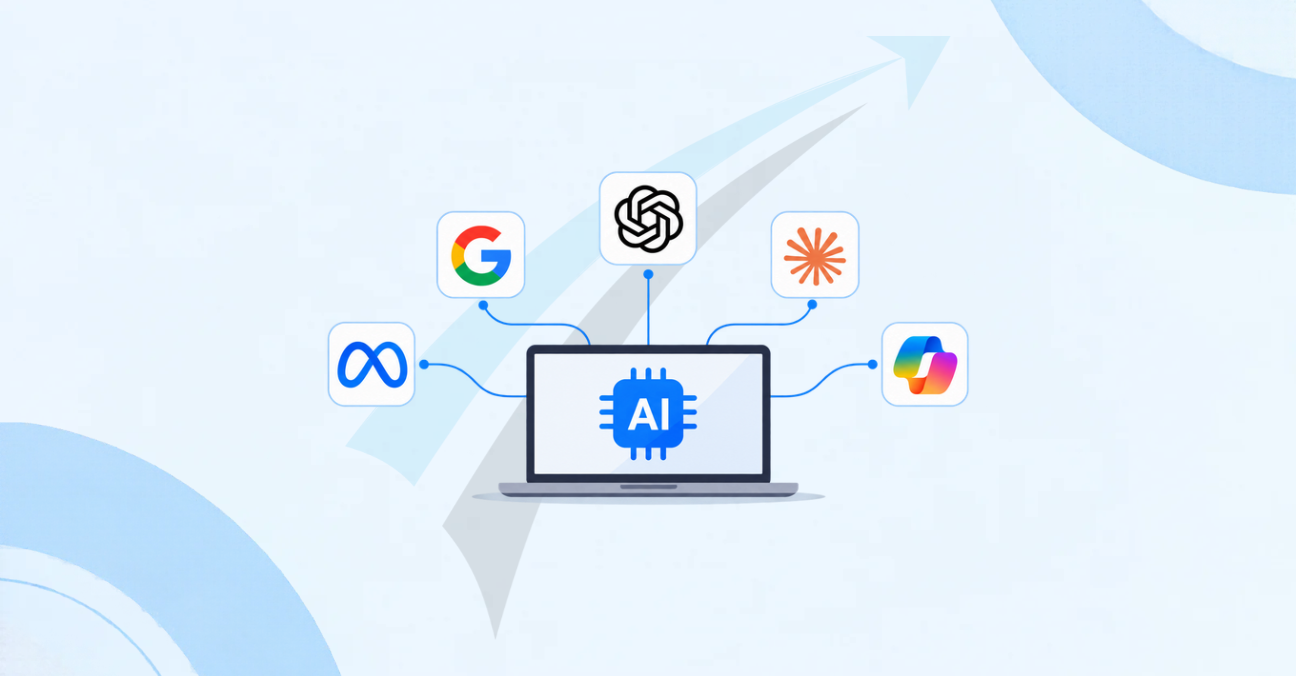
Students learn how to design AI apps which can utilise multi models to solve different issues, rather than one model to solve all issues. An app can recognise that a customer is asking for information and then use business rules to search a firms source material. The correct model can then be selected and the results sent to it for validation whereby the answer can then be forwarded onto a business process. Within the ‘Sky States’ Multi-Model AI program, students practice multi model comparison, routing, RAG, alongside Python and FastAPI.
What Is a Multi Model AI Program
Multi models are designed and comprise of a multi model set up with an ‘orchestration’ element between the app and the model suppliers. It recognises what is required to be solved and then correctly contextualises the issue. Appropriate rules can also be applied. Models can all solve dissimilar issues. For example, a long document can be summarised, or a query or structured answer provided.
Perhaps employing an in house assistant. AClassifier identifies if a query is of a billing, query/no suffers access or technical query nature. Routing is then employed to identify which model to utilise depending on the context. Only models that can produce the correct context or structure will be used. Where policy documents need to be consulted, relevant sections can be retrieved. Most vendors enable an app to balance outputs for quality, speed, cost, context and robustness.
How Does a Multi Model AI System Work
Typically, in science related areas issues follow a process of:
User input and context --> processed to produce the appropriate router model so that a particular AI model can be selected, according to the context. If RAG is being utilised then this can be done, otherwise external tools can be used. Output is then validated and an AI answer given.
An app will standardise inputs, recognise what must be solved and select a model and/or supplier. API integration is then used to send a prompt and context. For document related queries, data is retrieved and relevant sentences identified. The app validates and structures the answer. It will also record metrics including speed, number of tokens and errors alongside assessing outputs.
Key Components of a Multi Model AI Application
Model routing and API integration
This identifies the appropriate logic to be followed for directing models within an AI solution. Rules can be set concerning what type of task is to be solved, level of confidence, cost, speed and fall-back. Provider APIs can be accessed to connect to the required model. Simply learning how to make API calls is insufficient for effective LLM integration. In order to become a good LLM, it is important to not only understand how to make API calls but also how to authenticate, retry and structure outputs and manage errors.
Prompts, structured outputs, and RAG
Prompting entails defining for models a role, context and parameters. Structured outputs are also easier to validate. Retrieval-Augmented Generation (RAG) supplements the general knowledge of a model with relevant document content. Embeddings and vector searching identify comparable sentences. Application coding is used to supply reliable contextual information. Good RAG teaching should include these elements.
Backend, workflows, and evaluation
Python links providers, a retrieval service and business logic. FastAPI can expose these facilities as web endpoints. This can be highly beneficial for those designing services for deployment. Therefore, a FastAPI AI course can be a useful one to undertake. Over time, metrics can then be analysed to understand aspects such as quality, speed, costs, errors and security risks.
GPT Claude and Gemini in Multi Model Applications
Whilst each model has differing functionality, they can all be integrated via APIs. There is no reason to suggest that any one type of model is universally better. Each will have its own context and requirements. Choice of model is therefore dependent on factors such as the issue to be resolved, desired output structure, required speed, cost, robustness and/or assessment outcomes. An app can even utilise both a lead and fall-back model and then validate outputs. Comparing and analysing is also a transferrable skill. Ideally therefore a good GPT Claude Gemini course should cover this. Preference for one model over another should not prevail.
Multi Model AI vs Single Model AI
It does not necessarily follow that multi-model will automatically lead to high quality. Sometimes one model is most suitable for a precisely defined product. Furthermore, multimodal and mult-mode are distinct. Whilst multimodal relates to merging models, multi-model relates to working with multiple data types (text, image and/or audio).
Building a Multi Model AI Application
Initially analyse and then break down a business issue into individual sub-topics. Appropriate models can then be selected. APIs for these models are interconnected and routing rules defined. Within RAG, extra information can only be appended to an app output if additional information is required beyond that in a model prompt. A Python and FastAPI interface can be designed. Outputs can then be tested and assessed for quality, speed, cost and errors. For example, basic customer queries can be directed at a faster model. More policy orientated queries can be solved by a RAG model using resources as an aide. Where there is a potential for uncertainty, outputs from RAG can be added to an assessment queue.
Where RAG n8n and AI Workflow Automation Fit
RAG can be used to obtain relevant information. This can then be inputted into a form, email or spreadsheet. A model can then be called and outputs placed into a line of the same form, email or spreadsheet. Notifications can be generated when outputs are received in a particular place. This is therefore ideal for both AI workflow automation and also for individuals undergoing an n8n AI automation course. Although often coding based orchestration may be excessive, precise routing, testing, authorisation and error management cannot be ignored.
Challenges of Developing Multi Model AI Systems
Robust and trouble free running of a multi model system can be problematic. Suppliers have differing authentication, data and versioning policies alongside defining formats. Even when prompts are comparable, outputs can still vary. Moreover, as more services are accessed by an app, so too do both the monetary and speed related costs. Practical actions taken to enhance multi model systems include; provider adapters, time-out settings, re-trying, fall-back mechanisms, schema validation, data anonymisation, versioned prompts and assessment data sets. Equally important now is to effectively monitor production systems. The LLMOps guide highlights that modelling, application and cloud aspects must be connected.
Skills Needed to Develop Multi Model AI Applications
Our courses include Python, LLM essentials, Prompt Engineering, API integration, RAG, vector searching, routing, FastAPI, automation, deployment, and security and assessment. Specialist model knowledge is used to identify suitable models. Software engineering skills are employed to ensure good manageability of a system and operations techniques are applied to ensure good observability. The AI and Generative AI Program may nicely supplement in-depth LLM architecture study. Likewise, the Data Science and AI Program should underpin Artificial Intelligence fundamentals.
Alongside choosing, operating and governing models, it is also important. Those wishing to explore containerisation and CI/CD should look at the DevOps and Cloud Computing Program. Those wanting to further their knowledge in application security could undertake the Cyber Security & Ethical Hacking Program. Further information on ‘Agentic AI Application Architecture’ and ‘Why AI agent pilots fail in production? (architecture & reliability)’ provide useful background on architecture and reliability.
Develop Practical AI Engineering Skills with Sky States
The Sky States Multi-Model AI Program is 6 month long and involves analysing models, generating quality prompts, routing, question and answer operations, as well as automation. Models are then deployed and a dashboard is produced to summarise work. Investigate the aims, teaching style, points that can be earned on the platform and associated support in order to inform your decision on which program to enrol on.
Frequently Asked Questions
1. When should I use a multi-model AI program instead of a single model?
If there is variation in the quality, context, swiftness, expense and dependability needs for an application’s activities then a multi-model approach will be suitable. Typically one model will suffice for a narrow application area. Multiple models can be beneficial for experimenting with various AI vendors, setting up routing, adding a retrieval function and to fully deploy an AI application (not just prompts).
2. What are the main benefits and drawbacks of multi-model AI systems?
Advantages include adaptability, a back-up system, the ability to select models for specific application activities and good cost control. However, extra effort is required in relation to APIs, routing, testing, and security. Furthermore, teams must manage transitions between vendors and variable results for queries. Although having multiple models may be important for reasons other than the quantity of models, if not relevant to the product then it does not add value. Therefore, where the architecture addresses a genuine product requirement, it is valuable.
3. How do you orchestrate inference across multiple models in production?
A routing system can be utilised so as to analyse and segment queries according to cost and set guidelines. Models can then be directed accordingly. Retrial and fail processes can also be put in place. Adaptors can be used to standardise APIs. Further validation can be added together with time-out functions. Logging can be introduced and results analysed. High risk outputs can then be subjected to manual assessment. External tools can be drawn upon and objects can be retrieved as and when required. Permissions should also be set via the application.
4. What tools and frameworks support building multi-model AI applications?
Python, vendor APIs, embeddings and vector databases for data retrieval are often fundamental. Visual automation is also achievable using n8n. These are supported by tools for analysing, assessing and deploying. Various appropriate ‘right stacks’ exist depending on the nature of the product, the sensitivity of data, extent of operation and the team’s competencies. Tools should ideally offer ease of use and allow for testing to occur.
5. How do you monitor, version, and govern multiple models working together?
Assess usability, faults, retrieval effectiveness, response times and prompts. Store assessment scenarios to trial new developments before they are rolled out. Apply permissions, secret storage, archiving and censorship as appropriate. Alongside models, vendors should be covered within governance. The whole workflow should also be governed.
Conclusion
There are situations where a multi-model AI solution is beneficial for an application. Thoughtful consideration should be given to the aspects of quality, context, speed, cost and dependability. Multi-model AI includes areas for model choice, API connection, RAG, workflow coordination, assessment, analysis, security and deployment. Those wishing to follow a structured route can explore the Sky States Multi-Model AI Program. Student experiences can also be examined on SkyReviews. Further, individuals can continue to progress along their chosen route.