DevOps Course in San Francisco: Build a Complete CI/CD Project from Code to Cloud
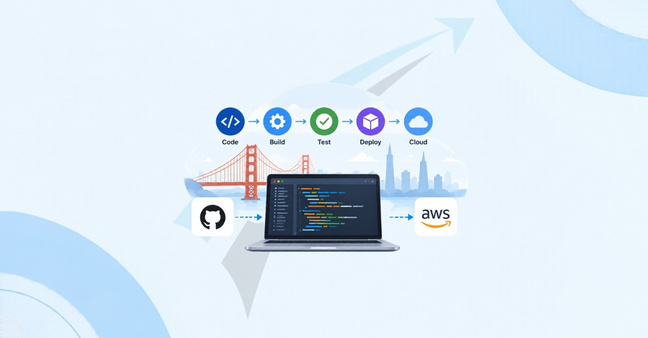
If you are a tech professional or an aspiring engineer who wants to further their careers quickly, a DevOps San Francisco course could be the best step to take in achieving the mastery of the current cloud infrastructure, automation, and continuous delivery are the fastest ways to do so. The need for software developers with skills in both coding and necessity exists in Silicon Valley, and specifically in San Francisco, where they are vital for both start-up companies and established tech firms. A comprehensive training develops more than just theory; it enables you to construct an entire cloud-based production-ready pipeline from source code.
In the very competitive Technology industry today, knowledge is not all that is needed in order to get a senior role as an Engineer. Automated deployment pipelines and multi-cloud experience are in-demand tech company skills. Cloud users who complete a cloud computing course in San Francisco realize the end-to-end operational skills needed to optimize software delivery, eliminate release stumbling blocks and improve application reliability.
The Changing World of Cloud Infrastructure and Automation
Over the last ten years or so, it's been nothing but a revolution in the software engineering industry. Many organisations are quickly transitioning from on-premise, bulky physical servers to a flexible microservices and cloud-native world. Engineering teams leverage a combination of best practices in Cloud Computing to ensure competitive speeds, to reduce configuration drift and to decrease human error in operating complex infrastructure, among other things.
In San Francisco, DevOps professionals should be able to handle all aspects of the current delivery chain. From writing the code and running automated tests to deploying in containers and provisioning infrastructure, a good level of technical accuracy is needed with each step. The national industry standard, Cloud Computing Certification, provides recognition for employers that you can implement Cloud Computing systems with the highest level of technical expertise.
Mastering the Lifecycle: An End-to-End Practical DevOps Project
Education in textbooks or slideshows is the terminology of the cloud world, but no one needs to understand how it works if they don't do a full end-to-end, real-world project. Learners will design an integrated system in an industry-aligned DevOps Bootcamp by integrating version control, containerization, orchestration, and infrastructure automation.
Here's how a real, production-class DevOps project goes from local development to live, cloud-based app.
1. Version Control and OS Administration: Starts from a Linux environment. It combines all of the key Git Training concepts, including starting repositories, handling feature branches, setting up SSH keys, and crafting tidy version control patterns, with Linux Administration to develop fundamental skills for using the command line.
2. Teaming up with enterprise cell: Enterprise tech sets frequently need hybrid server assistance. This ensures complete operational flexibility on a variety of enterprise IT environments, both on the open source side and on the Windows Server Administration side.
3.Automated Continuous Integration:The code is integrated into the Version Control System and the CI/CD pipeline is automatically started whenever the code is committed to the Version Control System by Jenkins or GitHub Actions. either by automated pipeline or sbt they all do three things: They collect the source code, run unit tests and run code syntax checking before they package.yo
4. Containerization using Docker: The tested application code is contained in lightweight portable containers. Participants in an on-track Docker Course are able to craft efficient Dockerfiles for guaranteed consistency in running code on their local workstation and on cloud production environments.
5. Containerized at Scale: The applications deployed are containerised and managed by the cloud platform. Engineers use hands-on Kubernetes Training to set up automated pod scaling, rolling software updates, load balancing, etc., and experience self-healing node management under real-world application loads.
6. Declarative Infrastructure as Code: Engineers write declarative code scripts, instead of configuring properties of server instances. Through Terraform Training, you build infrastructure in the Cloud as it happens, including the Virtual Private Clouds (VPCs), their respective subnets, security groups, computer clusters and so much more.
7. Automated Configuration Management:Rather, large-scale Server Clusters are treated with automated configuration Management using Ansible or other automated packages to install configuration to other packages, security patches and app configuration.
8.Multiple Cloud Providers and Azure Skills: Multi-Cloud and Azure Skills will be useful to the longevity of a career. In preparing for and passing an Azure Certification exam, you will show you have the skills needed to create, maintain, and grow enterprise workloads on Azure and hybrid cloud environments.
9. Security, Monitoring, and Portfolio Development: All infrastructures are hardened with proactive Cloud security practices, there are remote Monitoring Tools (Prometheus, Grafana) in place and monitoring CPU usage, Memory Thresholds and error logs. You will create a real portfolio for your interview, in your own GitHub folder, by completing these real world DevOps Projects.
Training Formats Compared: In-Person vs. Online DevOps Bootcamps
The preferred learning format depends on your schedule at work, flexibility in regard to location, and your collaborative style.
Advancing Your Technical Stack Across Specialized Disciplines
DevOps engineering is not an industry unto itself, but rather more of an overlapping of several disciplines within contemporary software engineering. After building a strong knowledge base in cloud automation with cloud engineer training, you can navigate into niche areas to gain valuable expertise in a specific field and access higher-value opportunities.
To develop cross functional skills, take the opportunity to investigate related learning pathways:
Broaden your software automation capabilities: Add capabilities to expand your software automation skills with Artificial Intelligence Workflows in the Agentic AI & Generative AI Program.
Data Science & AI: Understand how to extract insights from vast amounts of data and create predictive models by reading the Data Science & AI Program.
Learn how to protect automated deployment pipelines and cloud architectures on the Cyber Security & Ethical Hacking Program from the latest cyber threats.
Read learner success stories and outcome metrics – Authentic learner testimonials and success stories using verified success students' experiences on SkyReviews.
If you sign up for an all-inclusive Cloud Engineer Course, you'll have the technical assurance to operate within today's consistent multi-cloud systems and strengthen innovative technologies.
Frequently Asked Questions
What is the maximum cost of a DevOps course in San Francisco?
A well developed online-based interactive 6-month DevOps and Cloud Computing programme costs $3,499. This is the common tuition, which includes live instruction, cloud labs and preparation for professional certification. Always check up on any current fee structures and enrolment promotions from admissions personally.
What kind of requirements for a DevOps bootcamp in San Francisco?
Basic computer literacy, basic command line skills, and analytical thinking are required skills in most professional bootcamps. Previous experience programming in Python or some basic knowledge of Linux is useful, but basic modules are included to assist novices to scale up successfully.
What certifications am I going to be able to get after completing a San Francisco DevOps course?
A challenging coursework serves as instruction for industry-recognized certifications such as Microsoft Azure DevOps engineering careers and basic cloud qualifications. The qualifications demonstrate your skill on a practical level to prospective employers in the business world.
Do the DevOps programs at San Francisco offer job placement/career services?
Yes. Career development support in quality programs span from preparing resumes for maximum impact to optimizing a profile on LinkedIn, developing a portfolio on GitHub, rehearsing technical interviews or setting up pipelines for getting jobs.
Do you have DevOps classes offered in San Francisco on weekends or in the evenings?
Your working hours may be hectic and programs have arranged programs for working professionals with flexible live weekend or evening courses. Please refer to the college admissions for the exact time for your chosen start date.
Conclusion
To become a master devops, one needs to balance the execution of projects, multi-cloud skills, and disciplined practices. Docker and Kubernetes, Git and Linux, Terraform and Linux – all this is put into action in one seamless workflow and you gain engineering expertise.
Understanding the process of training structurally can offer the maps needed whether you're looking to streamline application delivery or wanting to specialize in a niche cloud career. Before enrolling, always verify what is currently at stake, the slots that will be available and necessary guidelines before making an investment.