
Currently Empty: $0.00



Blog
What Is the Relationship Between DevOps and Cloud Computing?
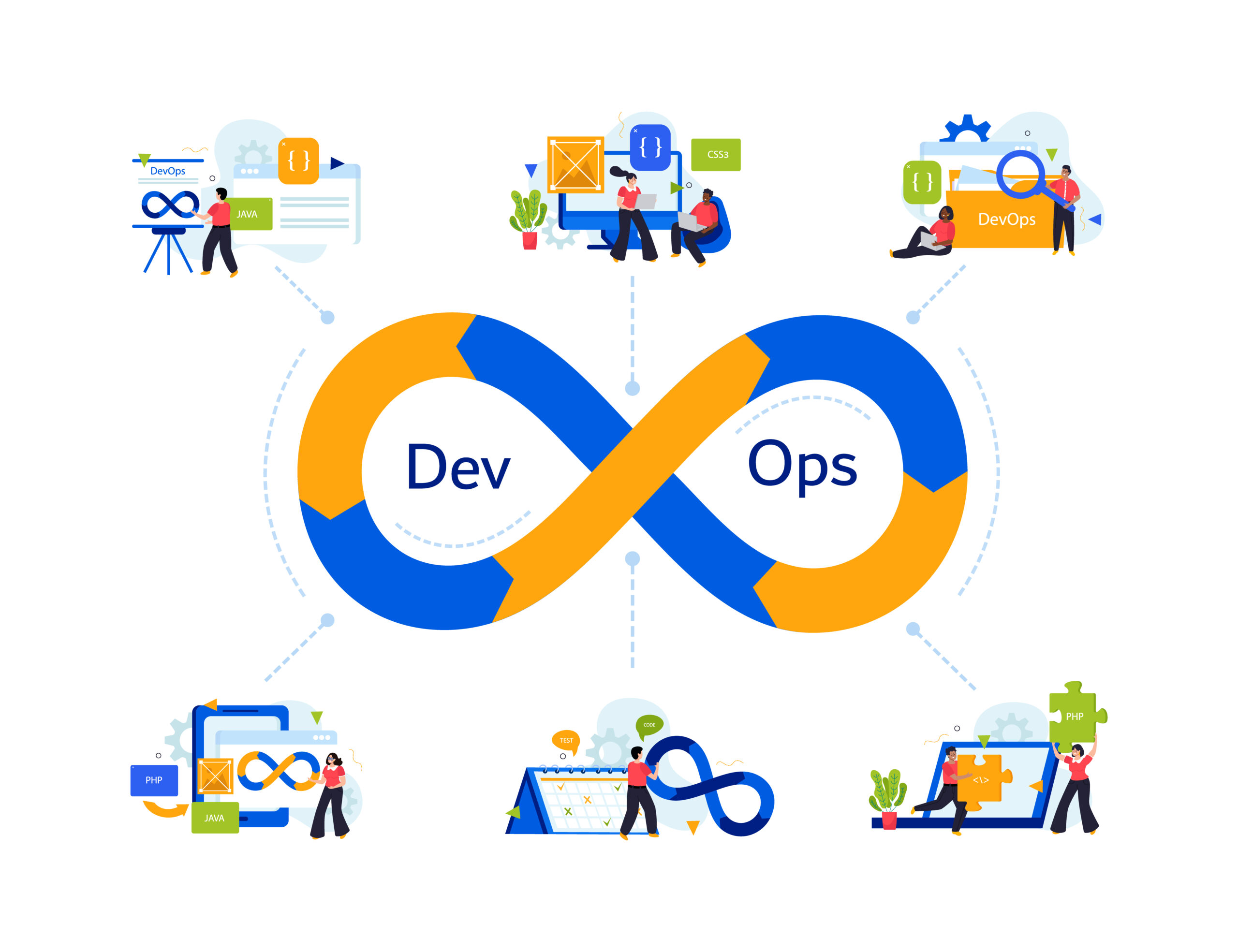
Introduction
In today’s digital world, companies want to build applications faster, deploy them quickly, and scale them easily. This is where DevOps and Cloud Computing come together.
DevOps helps teams develop and deliver software faster.
Cloud Computing provides the infrastructure to run and scale that software.
Together, they help businesses innovate, reduce costs, and improve performance.
What Is DevOps?
DevOps is a combination of two words:
Development (Dev) + Operations (Ops).
It is a methodology that improves collaboration between developers and IT operations teams.
Main Goals of DevOps:
- Faster software delivery
- Continuous Integration & Continuous Deployment (CI/CD)
- Automation of testing and deployment
- Better communication between teams
- Reduced errors and downtime
Popular DevOps Tools:
- Git & GitHub
- Docker
- Kubernetes
- Jenkins
- Terraform
- Ansible
DevOps focuses on how software is built and delivered.
What Is Cloud Computing?
Cloud Computing means storing data and running applications on remote servers instead of local computers.
Instead of buying physical servers, companies use cloud platforms like:
- Microsoft Azure
- Amazon Web Services (AWS)
- Google Cloud Platform (GCP)
Benefits of Cloud:
- Pay only for what you use
- High scalability
- Data security
- Global access
- Backup and disaster recovery
Key Differences Between DevOps and Cloud
|
Feature |
DevOps | Cloud Computing |
| Meaning | Methodology |
Infrastructure service |
|
Focus |
Automation & delivery |
Servers & storage |
|
Main Goal |
Faster software release |
Scalable infrastructure |
|
Tools |
Docker, Jenkins, Git |
AWS, Azure, GCP |
| Role | DevOps Engineer |
Cloud Engineer |
How DevOps and Cloud Work Together
DevOps and Cloud are strongly connected.
- DevOps automates development and deployment.
- Cloud provides servers and infrastructure for deployment.
- DevOps pipelines run on cloud platforms.
- Cloud enables scaling DevOps environments easily.
For example:
A company builds an app using DevOps tools → Deploys it on Microsoft Azure → Uses Kubernetes for scaling → All hosted on Cloud.
Without cloud, DevOps cannot scale easily.
Without DevOps, cloud resources may not be used efficiently.
Why Companies Combine DevOps and Cloud
Companies combine them because:
- Faster product releases
- Reduced infrastructure cost
- Better security monitoring
- Easy scaling during high traffic
- Automatic backups and updates
- High system reliability
This combination helps startups and enterprises grow faster.
Career Opportunities in DevOps + Cloud
The demand for DevOps and Cloud professionals is very high worldwide.
Basic Level (0–1 Year Experience)
- Junior DevOps Engineer
- Cloud Support Associate
- Salary in usa : $60,000 – $80,000 per year
Standard Level (2–4 Years Experience)
- DevOps Engineer
- Cloud Engineer
- Site Reliability Engineer (SRE)
- Salary in usa : $90,000 – $120,000 per year
Advanced Level (5+ Years Experience)
- Senior DevOps Architect
- Cloud Architect
- Infrastructure Consultant
- Salary in usa : $130,000 – $180,000+ per year
Should You Learn DevOps or Cloud First?
If you are a beginner:
First learn Cloud basics (Azure or AWS fundamentals).
Then move to DevOps tools and automation.
Why?
Because DevOps tools mostly run on cloud infrastructure.
Best Learning Path:
- Linux Basics
- Networking Fundamentals
- Cloud Fundamentals (Azure/AWS)
- Git & CI/CD
- Docker & Kubernetes
- Infrastructure as Code
How Sky States Helps You Learn DevOps & Cloud
At Sky States, we provide:
Beginner to Advanced training
Real-world projects
Microsoft Azure-based practical learning
DevOps tools hands-on practice
Resume building & interview preparation
Industry-expert mentors
Microsoft Certification Guidance
We also provide Microsoft certification preparation and certificate support, helping students build globally recognized credentials.
Our goal is to make you job-ready with real industry skills.
FAQs
1. Is DevOps better than Cloud?
Both are important. DevOps focuses on development processes, while Cloud provides infrastructure. They work best together.
2. Can I learn DevOps without Cloud?
You can learn basics, but real DevOps practice requires cloud platforms.
3. Which cloud is best for DevOps?
Microsoft Azure and AWS are most popular for DevOps roles.
4. Is DevOps difficult to learn?
It requires practice, but with proper training and projects, beginners can learn it step by step.
5. Does Sky States provide Microsoft certificates?
Yes. Sky States provides Microsoft certification guidance and certificate support for cloud and DevOps learners.